
Inspection & Testing
Prefer to read rather than flip? The full guide, section by section — each reference tagged statutory, code of practice or guidance:
-
Two pieces of legislation underpin everything and apply to every employer and every piece of work equipment. The Health and Safety at Work Act 1974 (statutory) requires employers to safeguard everyone affected by their work, provide safe equipment and premises, and provide the training and information needed. The Provision and Use of Work Equipment Regulations 1998, PUWER (statutory), require work equipment to be suitable, maintained in a safe condition, inspected and tested where appropriate.
The headline intervals for places of public entertainment: electrical installation routine check every year; at most three years between full electrical tests; lifting machines and complete assemblies examined every 12 months; lifting accessories every 6 months. Intervals can differ under a written examination scheme or where the competent person sets different dates.
-
The Electricity at Work Regulations 1989 (statutory): all systems, fixed and portable, constructed and maintained so as to prevent danger, and not used beyond their capability.
BS 7671, the IET Wiring Regulations (code of practice): periodic inspection and testing, with intervals set by installation type, use, maintenance and previous results.
IET Guidance Note 3: for theatres and places of public entertainment, a routine check every year and at most three years between inspection and testing.
HSE Guidance Note GS50: use a competent electrician, run planned preventative maintenance, make simple visual checks routine.
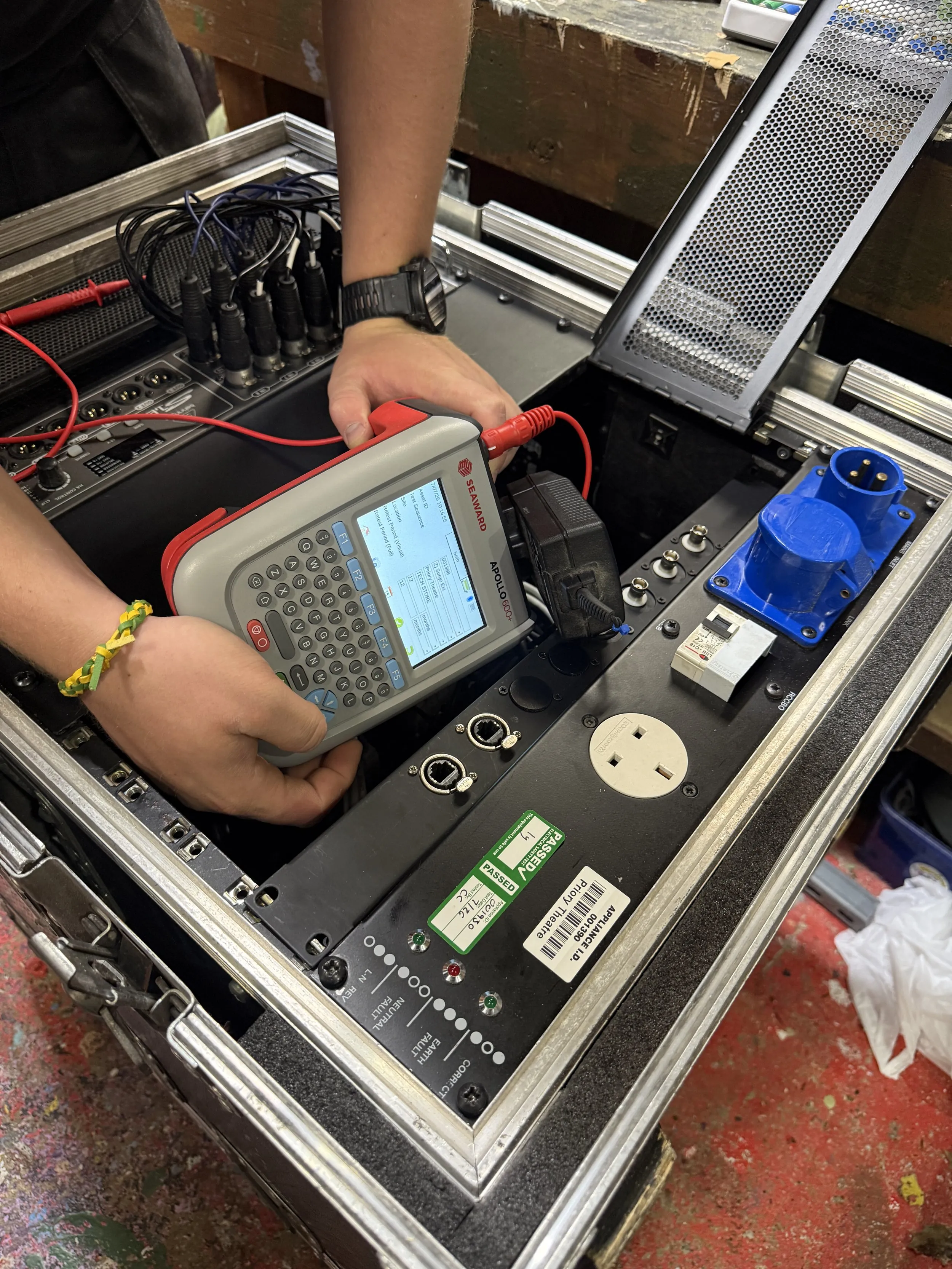
Portable appliances (PAT): no fixed statutory interval — frequency is risk-based on usage, environment and user. Combine user checks and formal visual inspections with testing where appropriate, and keep records as evidence.
-
Hemp sets, winch sets, counterweight sets, safety curtains, hoists and trusses, shackles, roundslings, wire rope assemblies, eyebolts, rigging screws.
LOLER 1998 (statutory): thorough examination by a competent person — lifting machines every twelve months, lifting accessories every six months, or under a written examination scheme; also after significant modification or repair, and after installation before first use.
It is generally accepted in the industry that a permanently installed winch-bar-and-shackles arrangement forms a complete lifting assembly, examinable every twelve months as a machine.
The Technical Standards for Places of Entertainment (the Yellow Book) and the ABTT Code of Practice for Flying: all mechanical installations comply with PUWER and LOLER, with examinations by competent persons.
-
Static lighting and scenery bars, curtain tracks, leg bars, speaker mounting points. The Yellow Book (code of practice) expects mechanical installations to be designed, constructed, maintained and managed for safety, with appropriate certificates of inspection. PUWER (statutory) applies as everywhere: suitable, maintained, inspected and tested where appropriate.
-
A load test is not an automatic requirement in most cases — the competent person decides. It is normally carried out after installation, after significant repair or modification, following a thorough examination after an unexpected occurrence, or when an insurer or licensing authority asks. A competent person, per the LOLER ACOP, is someone with the practical and theoretical knowledge and experience to detect defects and judge their importance for continued safe use.
Need a hand staying compliant? From PAT testing to installation and venue support — talk to us about a planned inspection programme. Summary only; responsibility rests with the equipment owner or premises controller. General guidance, not legal advice.